
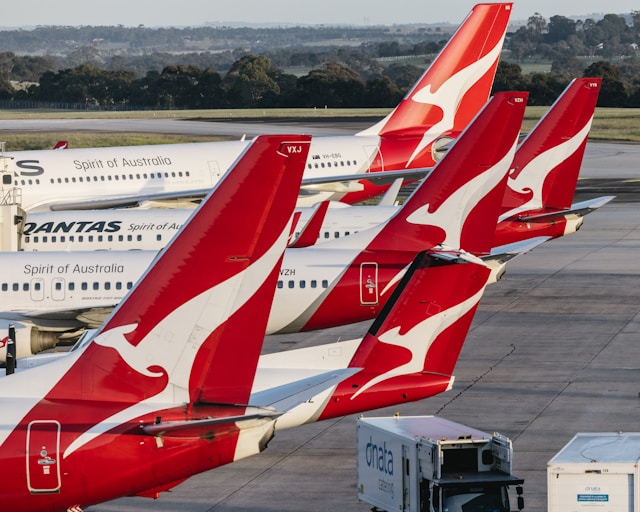
When a data breach hits 5.7 million customers and shakes corporate governance, even the boardroom feels the impact.
On June 30, 2025, Qantas Airways plunged into crisis. On the very last day of its fiscal year, an outsourced call center in Manila was compromised, giving cybercriminals access to a customer service platform. In a matter of hours, the personal data of 5.7 million customers had been exfiltrated.
Names, emails, phone numbers, postal addresses, dates of birth, and Frequent Flyer account details — the airline’s digital perimeter wasn’t breached, but its supply chain defenses collapsed.
Facing the growing fallout, CEO Vanessa Hudson publicly addressed the incident and took responsibility: “I sincerely apologize to each and every one of our customers. Our systems are now secure, but we must learn from this attack.”
But this incident wasn’t just about stolen data. It became a governance stress test — exposing weaknesses in supply chain security, customer trust, and executive accountability.
When the Supply Chain Becomes a Trojan Horse
The attackers didn’t storm Qantas’s core systems; they went around the firewall. The breach originated in a third-party call center based in Manila — a peripheral but strategic node in Qantas’s operations.
Initial findings point to an AI-assisted social engineering campaign: a fake Qantas agent, a convincing exchange, a misled offshore operator… and suddenly, the keys to the platform were handed over.
This highlights an uncomfortable truth: in a globalized operating model, every vendor is an extension of your attack surface. Outsourcing customer support doesn’t just delegate the work — it outsources part of your security. But accountability remains at home.
A Breach Contained, But Millions of Targets Opened
Qantas says the immediate breach has been contained. But in cybersecurity, closing the door doesn’t stop the storm. The stolen data triggered a cascade of secondary attacks.
Within days, waves of phishing campaigns targeted customers:
Fake Qantas refunds,
Malicious Frequent Flyer login pages,
Fraudulent password reset requests.
Qantas’s security teams scrambled to respond: round-the-clock monitoring, takedowns of fraudulent domains, tracking darknet forums, and deploying a 24/7 hotline to help customers secure their identities.
But the reality is stark: once personal data leaks, every customer becomes a potential entry point. The breach may be contained, but the exploitation continues.
Court Injunction: Legal Shield or PR Move?
On July 17, Qantas announced it had secured an injunction from the Supreme Court of New South Wales prohibiting anyone from viewing, sharing, publishing, or selling the stolen data. On paper, this sounds decisive.
In practice, it’s mostly symbolic. On dark web forums, national jurisdictions don’t exist. The groups suspected — ShinyHunters and Scattered Spider — operate far beyond Australia’s legal reach.
The injunction’s purpose is different:
Reassure customers and investors,
Demonstrate “visible action” to regulators,
Build a legal defense ahead of potential class-action lawsuits.
It’s less a cybersecurity countermeasure and more a narrative control strategy. In the economy of stolen data, attackers move faster than judges.
Leadership Hit… But Not Sunk
To signal accountability, Qantas’s board decided to cut executive bonuses for the year:
A total of 522,000 AUD (~€313,000) slashed;
Including 250,000 AUD (~€150,000) deducted from CEO Vanessa Hudson’s bonus alone.
On paper, it looks like a bold move. In reality, Hudson’s total annual compensation still reached 6.3 million AUD(~€3.8M), a 40% increase over the previous year. The penalty represents just 4% of her package.
The takeaway is clear: cybersecurity now factors into executive performance evaluations. For the first time, bonuses are tied not just to revenue and profitability, but also to resilience against cyber risk.
For some observers, though, this remains a cosmetic gesture rather than a structural shift.
Profits Up, Trust Down
Financially, Qantas remains solid: the airline reported a 15% increase in profits, reaching 2.4 billion AUD (~€1.45B). But the real cost lies elsewhere: customer trust.
Already weakened by illegal layoffs, canceled flight controversies, and operational disruptions, the Qantas brand faces yet another credibility crisis. In aviation, safety — perceived or real — is everything. A data breach doesn’t just expose records; it erodes the promise of reliability.
To regain confidence, Qantas has:
Rolled out a dedicated customer hotline,
Strengthened Frequent Flyer account security,
Provided personalized dashboards so customers can check exactly what data was compromised.
Rebuilding trust, however, is like repairing a cockpit mid-flight: it’s slow, fragile, and unforgiving.
Qantas as a Cyber Governance Crash Test
The Qantas incident goes far beyond a technical breach — it’s a full-scale stress test for corporate governance.
It exposes three structural challenges:
Third-party dependencies increase systemic risk,
Human identities are the new attack surface,
Traditional crisis responses can’t keep up with adversaries weaponizing AI, social engineering, and supply chain blind spots.
The hackers innovate faster than boards adapt. Customers pay first. Executives pay later — lightly. And regulators are still catching up.
So here’s the question: Was cutting €313K in executive bonuses a bold statement of accountability… or a symbolic gesture?
Share:

External Attack Surface Management
See your exposure before attackers do. Know what's already compromised.
of successful breaches start from publicly exposed assets.


